

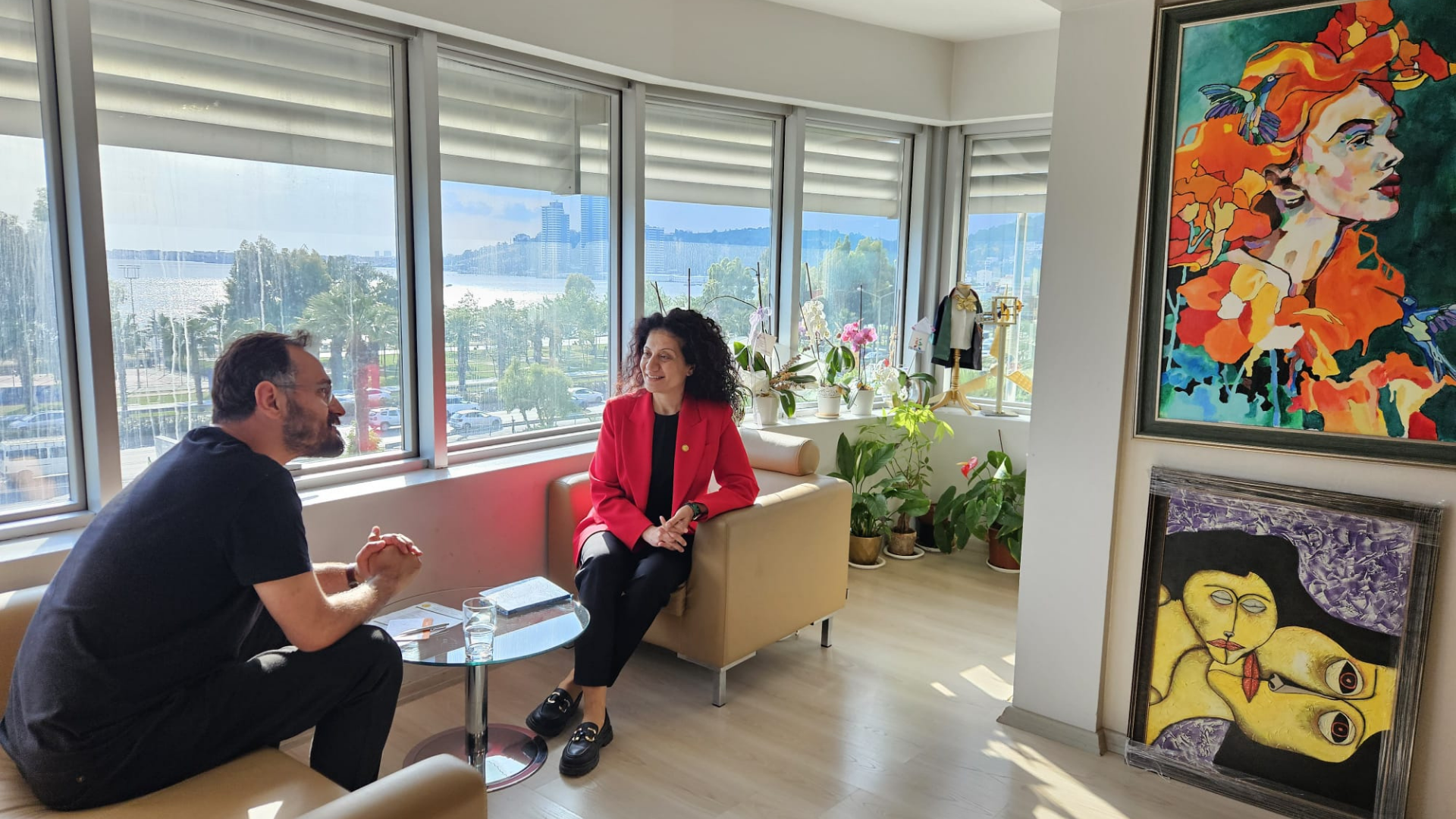

Attorney Zübeyde Aksay, President of the Turkish Women Lawyers Association and Vice President of the International Federation of Women in Legal Careers, spoke to FİKİR about the İzmir Declaration, issued after the FIFCJ Extended Council Meeting in İzmir. Aksay argues that women’s access to rights in the age of artificial intelligence is not merely a technological issue, but a legal, social and political one: “AI is still created by humans; human prejudice is reflected in it.”
Zübeyde Aksay’s relationship with law did not begin in a courtroom. It began in a classroom.
She became a mathematics teacher at the age of twenty-two. For fourteen years, she taught students how to solve problems. Then she began pursuing another equation in her own life: She wanted to be freer, to express her views more openly, not only to explain but also to defend. When her twins were only nine months old, she was admitted to Dokuz Eylül University Faculty of Law. She completed law school in four years, left the Ministry of National Education and began practicing as a lawyer.
Speaking to FİKİR Editor-in-Chief Murat Büyükyılmaz, Attorney Zübeyde Aksay, President of the Turkish Women Lawyers Association and Vice President of the International Federation of Women in Legal Careers, does not describe this transition as merely a change of profession. For her, law matters because “there is always something that needs to be defended.” The pedagogical experience she carried from teaching merged with the practice of legal defense; her work in women’s rights then took her from neighborhoods, villages, schools and universities to an international network of women jurists.
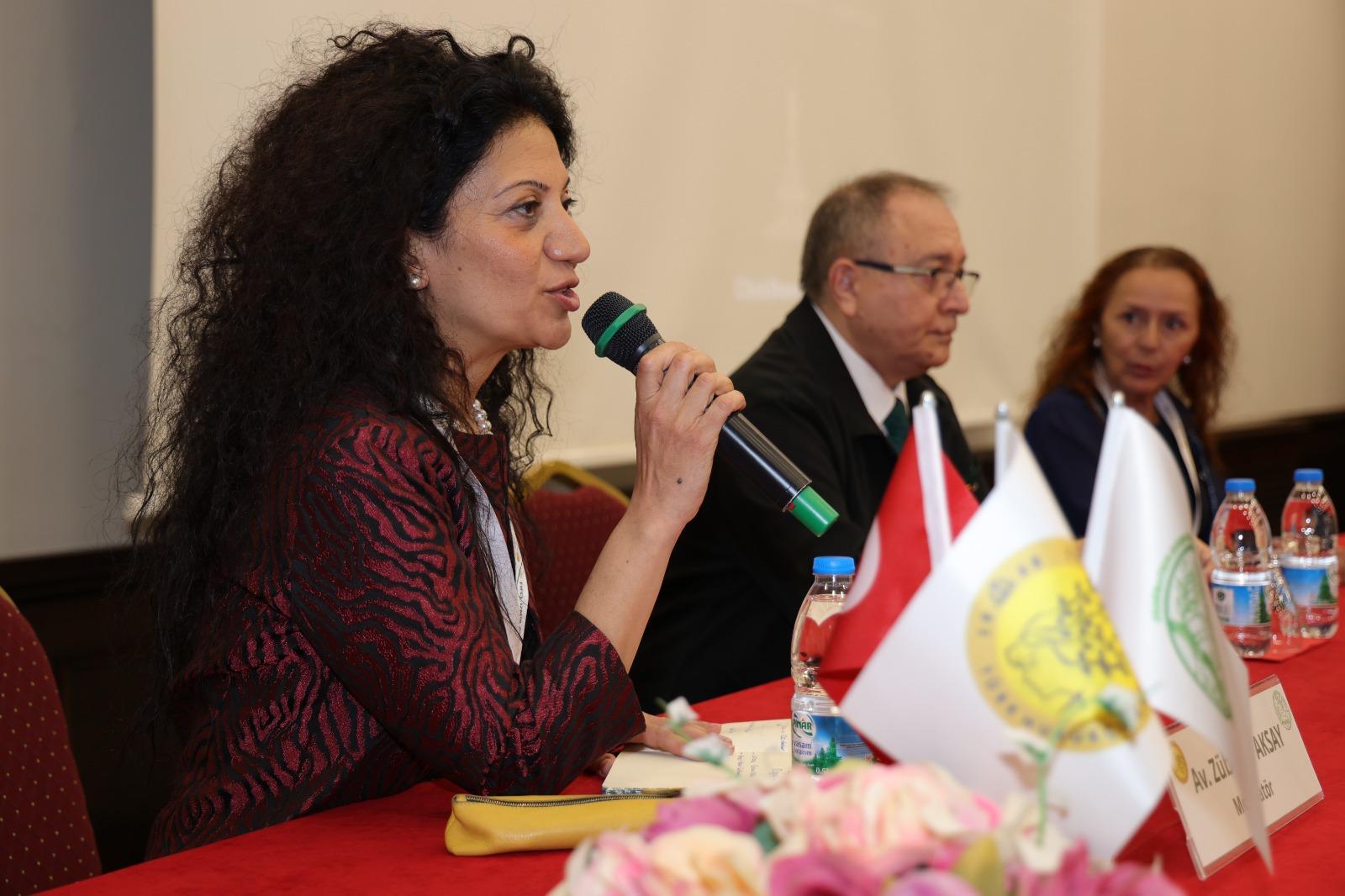
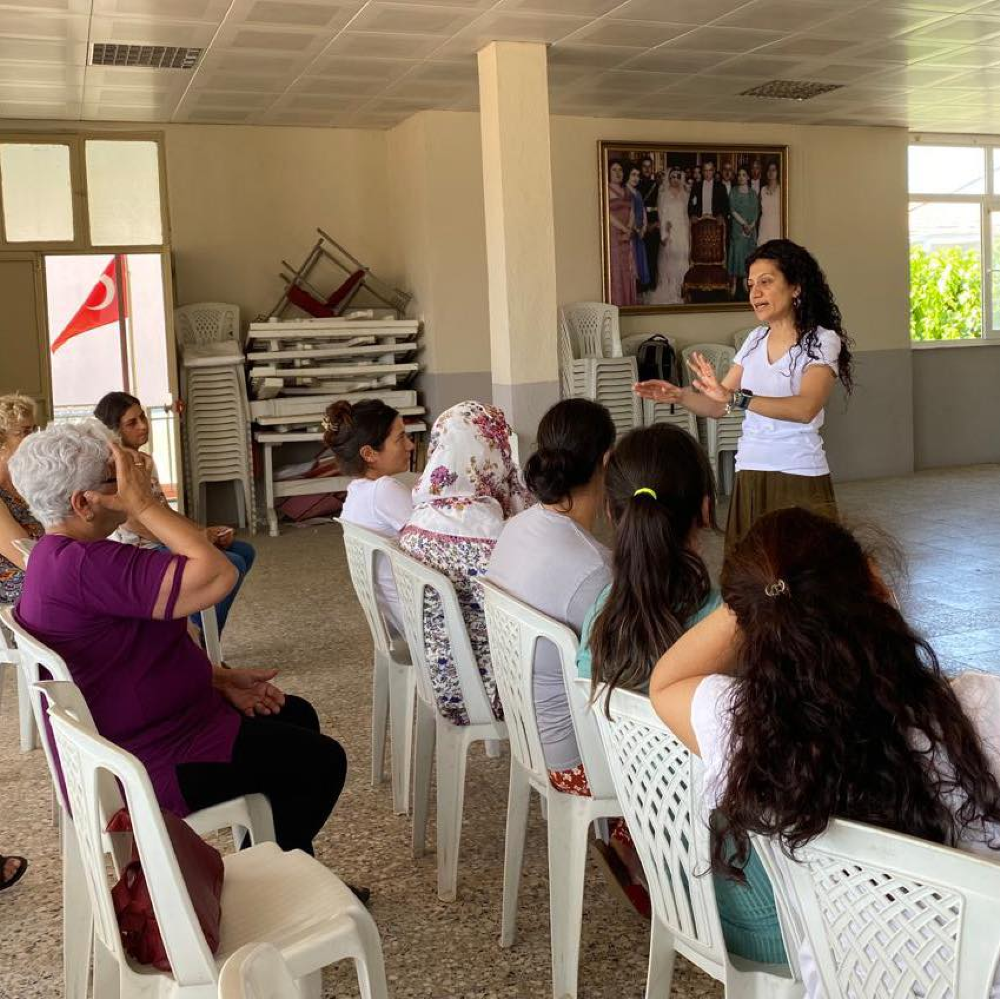
One of the most powerful turning points in Aksay’s story is her work on legal literacy for women. She recalls, from another vantage point today, the training sessions she held in Selçuk, Karşıyaka, villages, neighborhoods, schools and universities: “I was actually the one learning,” she says. Because what reaches the newspapers is often the “final point” of violence, discrimination or loss of rights. Beneath that, there are stories that remain in whispers, experiences treated as private or shameful, stories passed quietly from one woman to another.
Those experiences shaped Aksay’s determination in the struggle for women’s rights. While explaining to women where they could apply under Law No. 6284, how to write a petition, how to go to law enforcement and how to seek support from the İzmir Bar Association, she says she was also learning from the field: “Those women’s stories prepared me. They gave me the determination that I had to take part in this struggle.”
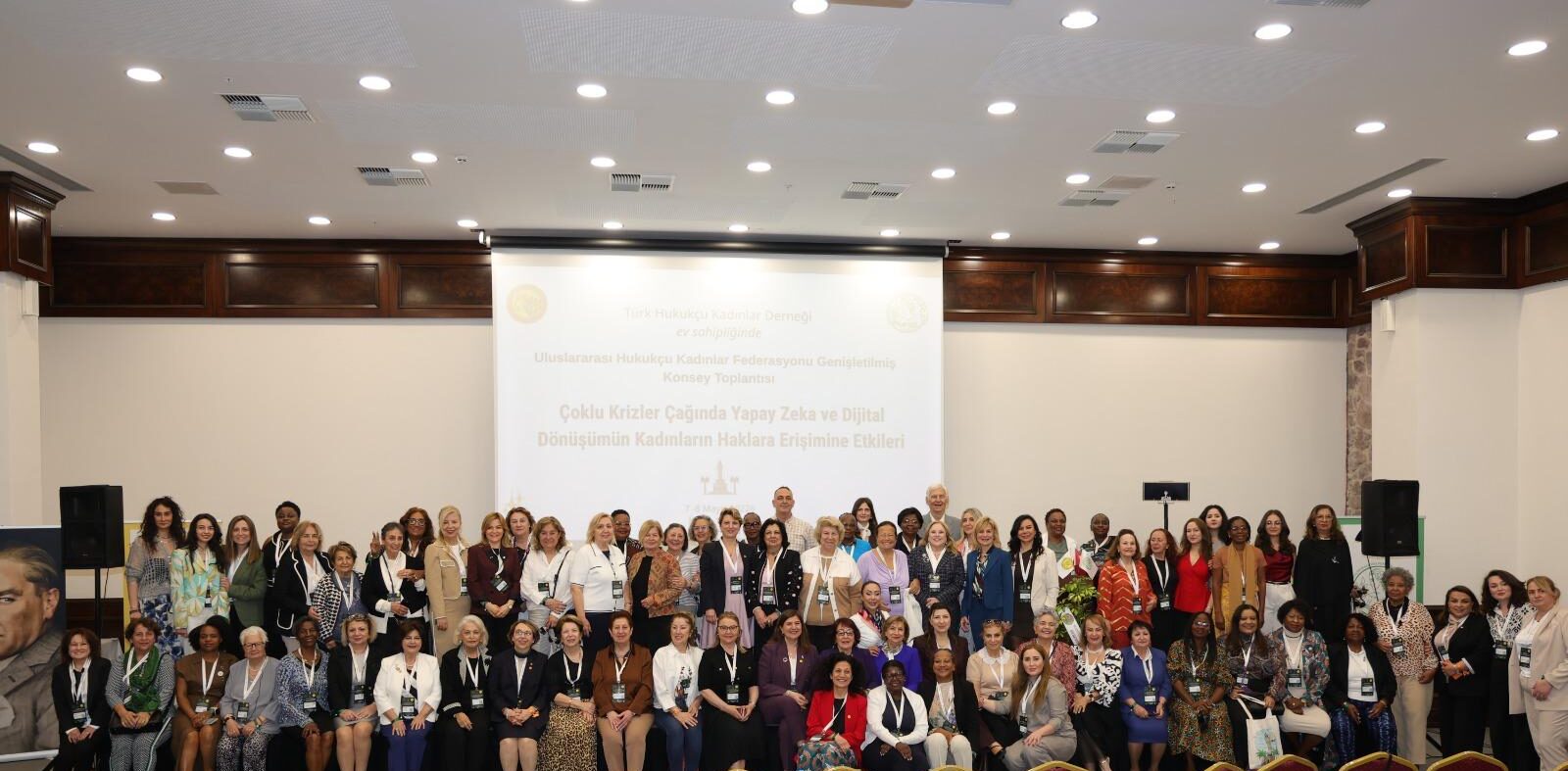
That local and deeply grounded experience connected, in May, to an international gathering in İzmir. The Extended Council Meeting of the International Federation of Women in Legal Careers, founded in Paris in 1928, was hosted in İzmir by the Turkish Women Lawyers Association. The meeting placed one of the most urgent questions of our time before women jurists: “The Impact of Artificial Intelligence and Digital Transformation on Women’s Access to Rights in an Age of Multiple Crises.”
The İzmir Declaration, shaped by presentations and academic contributions from jurists from Turkey, Mozambique, Brazil, Angola, Spain, Italy, Azerbaijan and Pakistan, did not treat AI and digital transformation as narrow technological subjects. It framed them as a new legal field affecting women’s access to justice, safety, health, work, social assistance and public life. The Declaration drew a wide map: From algorithmic discrimination to digital violence, from data security to care work, from the intersectional inequalities faced by migrant and disabled women to the risks posed by the use of AI in judicial processes.
Its simplest and most striking sentence is this: Technology is not neutral.
At first glance, this may sound like the summary of a technical debate. Yet in the İzmir Declaration and in Aksay’s account, technology is part of a broad field of rights: Recruitment, credit, health, justice, social assistance and digital violence. If datasets carry the inequalities of the past, algorithms can reproduce those inequalities in new and invisible forms. For women, the question is no longer only whether they can reach the courthouse, the police station, the municipality or the bar association. It is also whether they can understand how the digital systems making decisions about them are designed, what data they are fed with and who oversees them.
From classroom to defense
Let us begin with you. How did your path intersect with law, the struggle for women’s rights and organized work among women jurists?
I began my professional life as a mathematics teacher. I became a teacher at twenty-two. After fourteen years of teaching mathematics, while I was still working as a teacher, I took the university entrance exam again and was admitted to law school. I completed the degree in four years, left the Ministry of National Education and began working as a lawyer.
Why law? Because I am freer. Teaching was wonderful; working with students was a great joy. But being a lawyer gave me the opportunity to join associations, to work actively, to express my views more clearly and to organize my working life more freely. To defend is a very powerful feeling. Explaining something to students was beautiful, but defending is something else. Regardless of where you stand, there is always something that needs to be defended.
My interest in women’s studies goes back a long way. In my own life, in my family and in everyday life, I always noticed how women were pushed into the background. When I began graduate studies in women’s studies at Dokuz Eylül University, this interest gained a more academic framework. I encountered the concepts; I saw how women’s struggle had been woven from the past to the present. That helped me position myself more consciously as a defender of women’s rights.
“While teaching women, I was actually learning”
Where do your field-based legal literacy efforts fit into this story?
In those training sessions, I was actually the one learning. We went to villages, neighborhoods and schools. We explained to women where they could apply if something happened to them, what they could do in different situations, what they could request under Law No. 6284, how to write a petition, how to go to law enforcement, how to give a statement. You can think of it as legal literacy for women.
But I learned a great deal there. Because the experiences women live through are very different from what we read in newspapers. What appears in the press is usually the point at which everything has reached its most severe stage. Yet there is so much that remains unspoken, whispered, treated as private and passed from ear to ear. Women opened those stories there. What prepared me for this struggle, motivated me and strengthened my resolve was, in part, those women’s stories.
We did this work not only in rural areas but also in Karşıyaka, Selçuk, schools and universities. It is also important to reach young women. They face different problems of their own. I also gave many trainings on women’s rights in working life, particularly from the perspective of labor law. We worked especially with midwifery students, who are in direct contact with women. All of this became a body of experience for me. Even today, if I am invited, I go. Because I consider meeting those women as valuable as international gatherings.
From İzmir to an international network of women jurists
How did your work within the Turkish Women Lawyers Association and the International Federation of Women in Legal Careers develop?
The Turkish Women Lawyers Association was founded in 1968. It is a very valuable and deeply rooted association, based in Istanbul. Among its founders is Attorney Süreyya Ağaoğlu, known as Turkey’s first woman lawyer. I joined the association from İzmir. Later, I was elected to the board of directors, then became vice president and eventually president. Becoming president from İzmir was especially meaningful for me. A very large part of our membership is in Istanbul. It mattered to me to show that a president from İzmir could carry out this responsibility.
The International Federation of Women in Legal Careers, meanwhile, is a very old and important federation founded in Paris in 1928. It also supported the founding of the Turkish Women Lawyers Association. One of its aims is to encourage women’s legal organizations in countries where such structures do not exist and to expand international solidarity. Today we are speaking of a broad network that brings together women jurists from many countries.
I serve as vice president of the federation. For me, this is both a great honor and a great responsibility. When you come together with women jurists from different countries, you see how different cultures can be and yet how similar the problems are. Alongside domestic responsibilities—childcare, meals to be cooked at home, children’s homework—we are also trying to exist in the public sphere. Making time for civil society work, violence against women, sexual harassment, online harassment… Cultures differ, but many of the problems women face are remarkably similar.
“There is not only Istanbul; there is İzmir too”
Did it have a special meaning for you that the FIFCJ Extended Council Meeting was held in İzmir?
Yes, absolutely. Such meetings had been held in Turkey before, but mostly in Istanbul. This time I wanted it to be in İzmir. I wanted jurists in İzmir, especially women jurists, to benefit from this gathering. It was important for me to show that there is not only Istanbul; İzmir too can host such an important meeting.
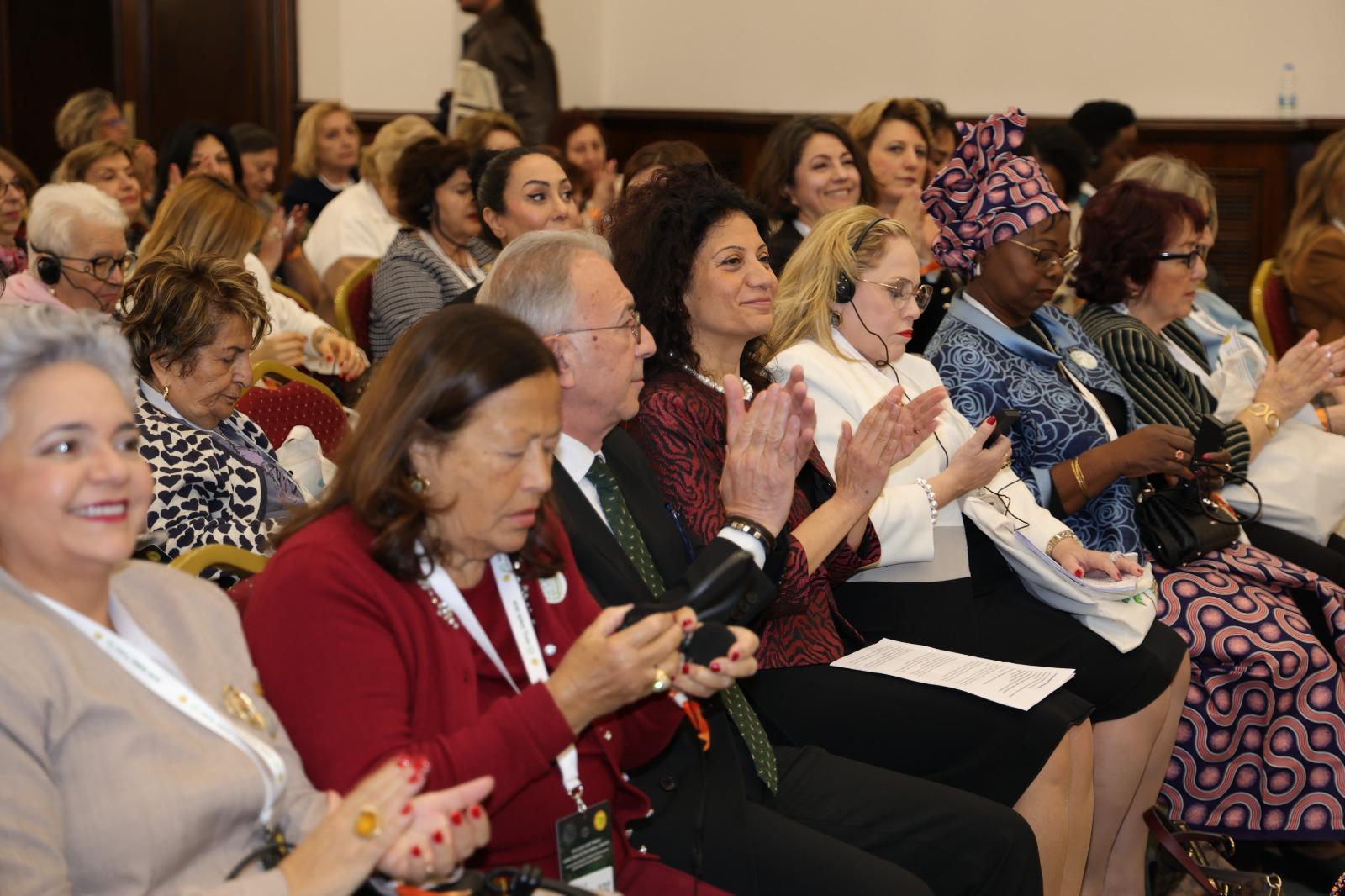
It was a large organization. We had more than one hundred participants. Although it looked like a four-day program, the preparation took nearly three months. Two days were devoted to cultural visits to İzmir, Ephesus, Selçuk and the House of the Virgin Mary; during the meeting days, women jurists from different countries shared their presentations on AI, digitalization, women’s rights and access to justice.
One of the most important aspects of this meeting was the opportunity to learn directly from good practices in different countries. Aksay says she was able to see more concretely the digital violence regulations in Brazil, how the lack of internet access in Mozambique complicates women’s paths to rights, and how climate-related crises can increase violence against women. She emphasizes that face-to-face encounter made the transfer of knowledge far more powerful than a written report alone could have done.
This organization was not carried out alone. The İzmir Organization Committee, the board of directors of the Turkish Women Lawyers Association and supporting institutions all contributed greatly. I would like to thank Mehmet Sepil, Honorary President of Göztepe, who hosted us at the opening cocktail; Mayor Filiz Ceritoğlu Sengel, who hosted us in Selçuk; and the Security Branch of the İzmir Provincial Police Department, which accompanied us with great care throughout the organization.
A lesson from Brazil
Among the examples shared by different countries, which ones struck you most?
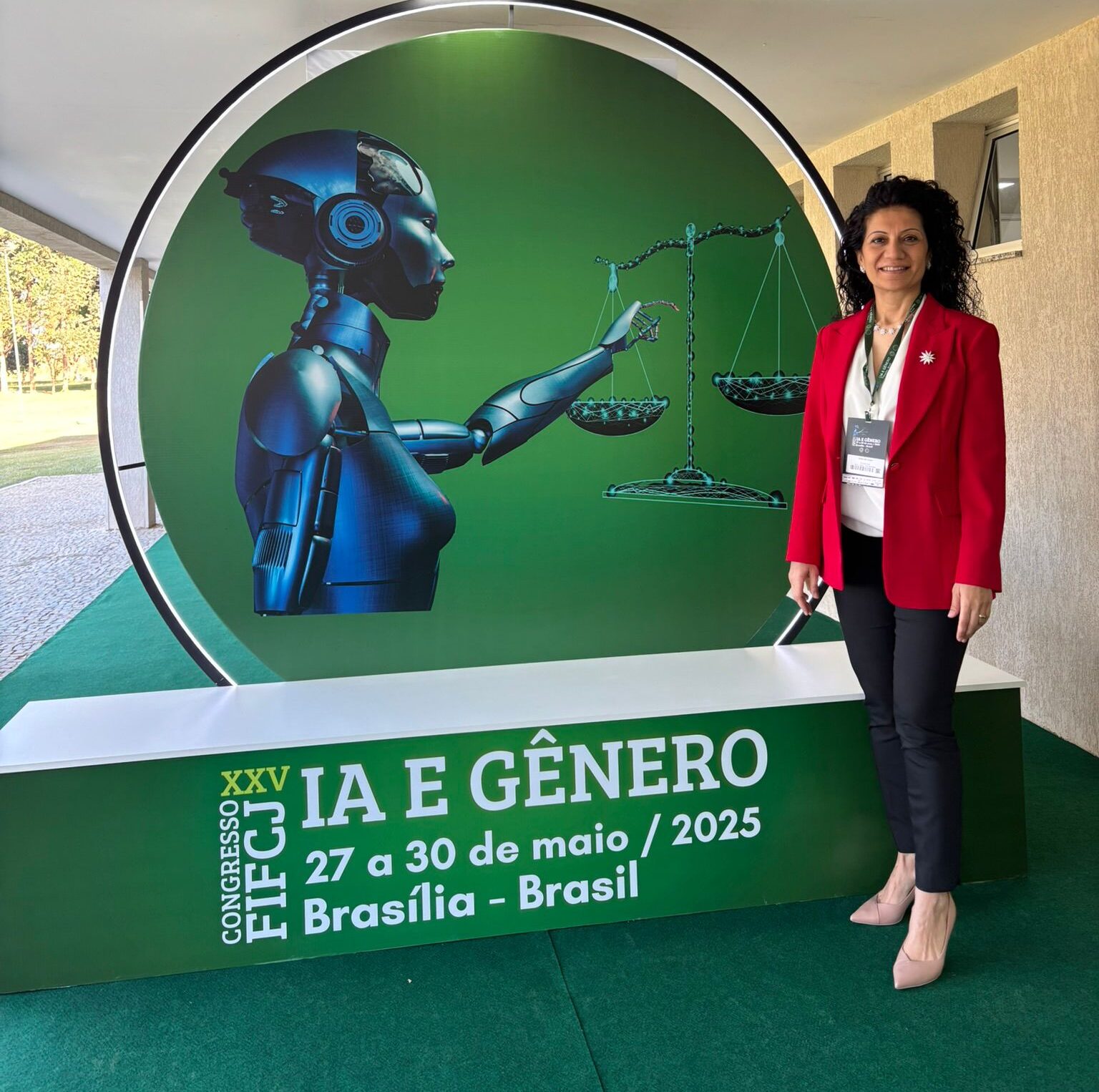
One of the Brazilian examples was very striking for me. I learned there about legal regulations adopted after incidents related to social media and digital violence. For example, I heard that in Brazil, employers who hire women who have survived violence are granted tax incentives. It is very valuable to hear such good practices face to face.
Another example concerned AI and digital violence. Law No. 15.123, adopted in Brazil in 2025, provides for an increase in penalties when the crime of psychological violence is committed using artificial intelligence or technological tools that alter the victim’s image or voice. This is an important example of explicitly placing AI-assisted deepfake and similar attacks within the legal framework addressing violence against women.
Learning about such examples also allows us to think about our own legal system. How was such a regulation made in another country? Which gap did it close? What similar steps could we take in our own law? These questions multiply through international encounters of this kind.
What does the İzmir Declaration say?
How should we read the İzmir Declaration issued after the meeting?
The İzmir Declaration is a very detailed document. It shows that the work was not superficial. It shows that the women who came here had prepared and worked seriously, and that the issue is not confined to a small field. The Declaration is also very valuable because it does not reflect the problem of a single country or region alone, but experiences across continents.
The relationship between AI and women’s rights is a very new field. There are not yet many publications on this subject. That is why I think the İzmir Declaration is a pioneering document. In the future, women and men who want to conduct research in this field can open new areas of study by following different sections of the Declaration. They can move from the sources and references there toward deeper research. This, in turn, can help us reach a better point in women’s access to rights.
One of the Declaration’s strengths is that it does not treat technology only as a risk. It states that AI systems can reproduce discrimination, but it also records that, with the right policies, technology can facilitate women’s access to rights. Azerbaijan’s experience of digitalization expanding women lawyers’ access to the profession, examples from Pakistan that guide women who have experienced violence, and AI-supported accessibility technologies are all part of this two-sided view.
That is why the İzmir Declaration should be read not only as a warning but also as a call to work. It says to lawyers, bar associations, universities, local governments, technology institutions and the media: This field is now yours too.
Technology is not neutral
One of the Declaration’s core findings is that “technology is not neutral.” How do you explain this sentence?
The reason AI is not neutral is that it is still created by human beings. Human prejudices, social prejudices and often male prejudices are reflected in these systems. The fact that those who develop technology are largely from a particular gender also produces this result.
This is why women need to receive more education in science, technology, engineering and mathematics. Opportunities must be provided and women must be supported in entering these fields. If women remain outside the processes of technological production, it becomes much harder to expect that technology to sufficiently take women’s experiences, needs and rights into account.
When we look at Turkey, we have both advantages and disadvantages. However much we criticize the education system, in some respects we have advantages compared with certain countries in terms of access to digital media, the internet and information. Women can learn many things faster and make calls for help more quickly heard. But at the same time, they are more exposed to a different field of violence and discrimination. Digital violence is now a serious problem in Turkey.
AI in the judiciary and women
What kinds of risks can the use of AI in the judiciary and public services create for women’s access to justice?
The use of AI in the judiciary can be considered, up to a certain point, as an auxiliary tool. Today it is mostly used in office work and tools that assist the profession. But any direct judicial decision-making system concerning women must be approached with great caution.
The İzmir Declaration also discusses this issue in particular. When risk assessment tools used in judicial processes attempt to predict future behavior based on past conduct, they raise serious questions regarding the presumption of innocence, the right to a fair trial and effective legal remedies. In areas such as violence against women, protective measures, divorce, custody, alimony or criminal proceedings, if we do not know which data an algorithm uses to produce decision support, it becomes difficult to assess whether that decision is fair for women.
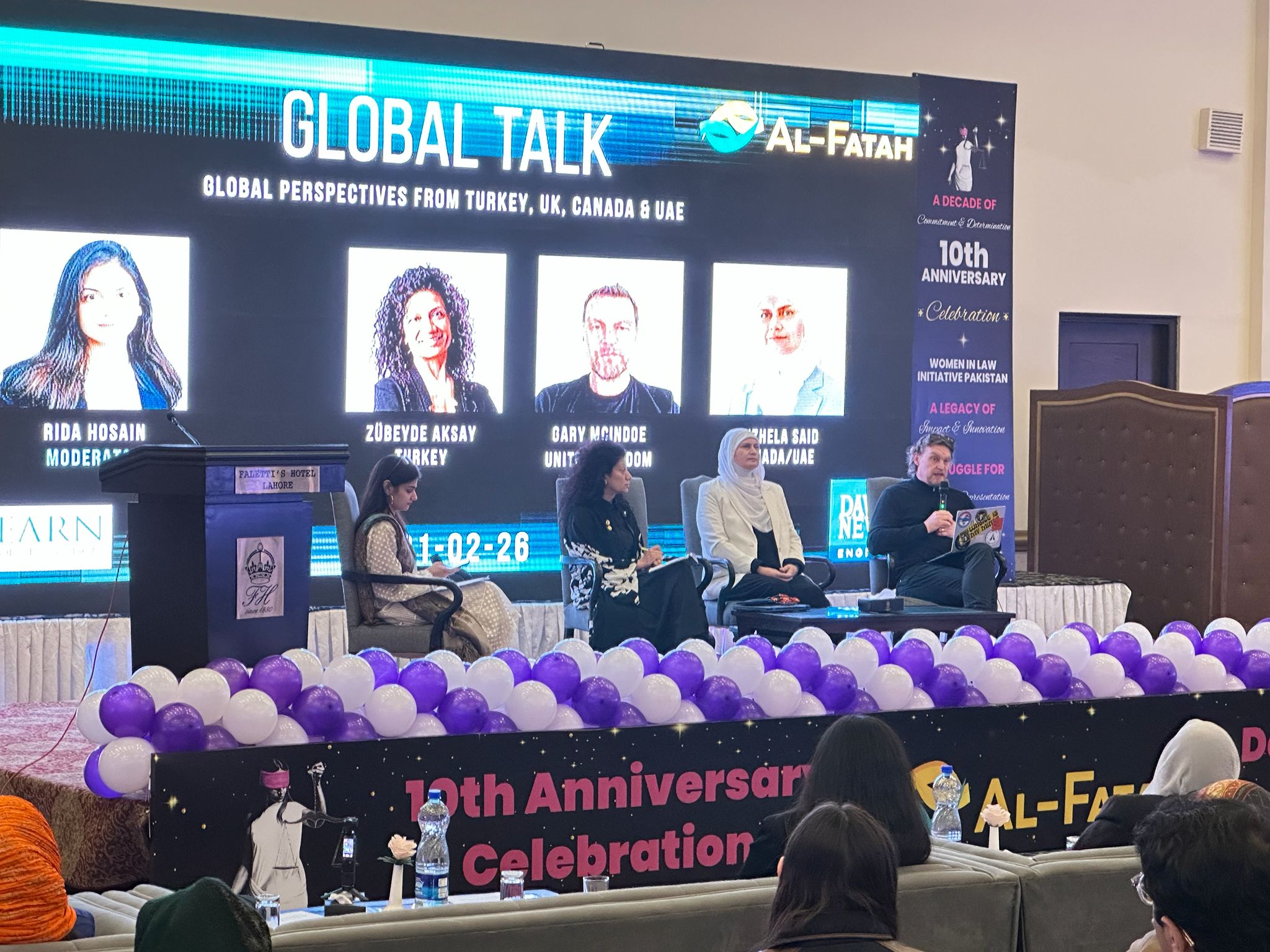
On the other hand, there are areas where AI can be used advantageously. At the meeting, an example was mentioned from Pakistan: an application designed to show women who have experienced violence what to do, where to apply and how to access even a short petition template. I found this very important. We could do something similar. Reaching women one by one is very valuable, but digital tools can help us reach many more.
The important thing is to think of AI in two dimensions: its advantages and disadvantages. In advantageous areas, systems can be established to facilitate women’s access to rights. In disadvantageous areas, however, risks such as data security, digital violence, privacy violations, incorrect or discriminatory decisions must be addressed very carefully.
Is KADES widely known?
What is the most urgent issue for Turkey?
For me, one of the most urgent issues is digital violence. Data security is also very important for women. The fact that women’s personal data, location information and everyday movements have become so visible in the digital environment can leave them vulnerable.
There is also the issue of KADES, the Women’s Emergency Support Application. It is a very valuable tool. Yet when I explain it to women from different economic and social backgrounds, I still encounter many women who do not know about it. For this reason, I think the police, local governments and the media should do much more to promote KADES. A campaign could be organized. It could be ensured that every woman has this application on her phone.
Tools like KADES do not solve the entire problem on their own. But in moments of violence, they create an important possibility for rapid application. The real issue is how far these possibilities actually reach women. In the medium and long term, the education system must also change; education policies oriented toward this must be developed and implemented. Otherwise, the problems women face cannot be solved permanently.
What can municipalities and the media do?
After the İzmir Declaration, what concrete duties fall to the state, bar associations, universities, local governments, the media and technology institutions?
We will share the Declaration with the relevant institutions. This way, we want the conclusions we reached to be heard. Each institution can derive a task from the Declaration in its own field. Universities can identify academic research topics. Jurists can examine good practices in different countries. Bar associations and women’s organizations can establish mechanisms to strengthen women’s access to rights.
Local governments and the media deserve special attention. Their power cannot be overlooked. In some cases, they may have more direct access to people than the central government. Municipalities can directly reach women living in their districts or cities.
Let me give a concrete example: A special section on women’s access to rights could be added to the digital applications of metropolitan or district municipalities. Systems could be established showing women where to apply on issues such as violence, divorce, alimony, custody, labor law or social support; where necessary, they could make appointments or access basic petition templates. This could be done not only in İzmir but also in Manisa and other cities. A shared application logic could be developed without regard to party affiliation.
One might think that women living in rural areas or women with limited digital literacy would have difficulty accessing such systems. But they have daughters, daughters-in-law, neighbors, younger relatives. Somehow, this information will reach them too. Here, the media also bears a major responsibility. The media must explain these tools, make them visible and create awareness around women’s access to rights.
“We did not obtain these rights easily”
What would you like to say to young women jurists?
I know that it is not easy for young women jurists to stand on their own feet in the legal profession. I think they face more difficulties than men. They can encounter many problems: equal pay for equal work, harassment, not being taken seriously by clients, social prejudices reflected in professional life.
Despite all this, young women jurists must take responsibility in the field of women’s rights. They should work with bar associations and civil society organizations. We did not obtain these rights easily. If it were not for the struggle of the women who came before us, we would not have reached where we are today. They did not do this for any personal benefit; they struggled for women and for rights.
We too have a responsibility toward future generations. What I do is not only for myself. Perhaps I will not see some of the results, but the generations after me will. Young women jurists must carry this flag. They need to take part in bar associations, civil society organizations and women’s rights work; to educate themselves, to act in solidarity and to make time for this struggle.
A brief summary of the İzmir Declaration
The İzmir Declaration examines the impact of AI and digital transformation on women’s access to rights along seven main axes.
The first is algorithmic discrimination. The Declaration states that AI systems can reproduce past inequalities through data in fields such as recruitment, credit, health and justice. Historical datasets in which women are already disadvantaged can turn into invisible but systematic discrimination in algorithmic decisions.
The second is data security and digital violence. Deepfakes, cyber harassment, the non-consensual sharing of intimate content, misuse of location data and exploitation of reproductive health data threaten not only women’s privacy but also their physical and psychological safety.
The third is multiple crises. Pandemics, economic crises, war, migration, climate crisis and digital transformation are not separate from one another; together they create a multi-layered crisis structure affecting women’s access to rights.
The fourth is the digital divide. Internet access, digital literacy, ownership of devices and the ability to use online public services are now part of access to rights. Women who cannot use digital systems may become invisible in many areas, from social assistance to legal applications.
The fifth is intersectional vulnerabilities. Disabled women, migrant and refugee women, poor women, older women and women carrying the burden of care are not affected by digital transformation in the same way. The assumption of a single, uniform women’s experience makes these different vulnerabilities invisible.
The sixth is care work and economic dependency. The Declaration emphasizes that women’s unpaid care work must be made legally and economically visible. While digitalization may offer some women flexibility in working life, it can also deepen inequality by increasing domestic burdens.
The seventh is digital public spaces. Online gaming, social media and platforms are no longer merely spaces of entertainment or communication; they are new arenas affecting women’s participation in public life. Harassment, hate speech and exclusion in these spaces directly concern women’s digital citizenship.
The Declaration’s call is clear: AI systems must be transparent, auditable and accountable; gender equality must be placed at the center of technology policy from the outset; data protection law must explicitly cover digital violence; digital literacy must be recognized as a right; care work must be legally recognized; and local, national and international institutions must work together in this field.
The question rising from İzmir
What the İzmir Declaration and Attorney Zübeyde Aksay’s words point to is that AI is not merely a “new technology” issue for women. Algorithms, data systems, digital application channels and online violence now play a direct role in women’s access to rights. Justice is not established—or undermined—only in the courtroom. It is also shaped on application screens, in datasets, inside municipal apps, on social media platforms and in digital tools that assist judicial processes.
That is why the phrase “Erkek a(i)dalet” is more than a wordplay. In Turkish, it places “AI” inside “adalet,” meaning justice, while invoking the male-default assumptions embedded in data, design and decision-making. It is a warning about systems that treat male experience as universal, male data as normal, the male body as default and male working life as standard. The warning rising from İzmir places one question at the center of the struggle for women’s rights: For whom, by whom and under whose oversight is technology being built?
Why this conversation matters
This conversation moves the debate on AI beyond the language of technical innovation and connects it to women’s everyday lives, safety and ability to seek rights. Zübeyde Aksay’s story shows that legal knowledge is built not only in books, but also through the real experiences women carry.
FİKİR Manifesto: For a new idea of life in the Republic’s Second Century
Whose hand shapes technology?
The core warning of the İzmir Declaration is that technology is not automatically just. The results a system produces depend on who designs it, what data it is built upon and how it is audited. That is why women must have a stronger presence in technological production, legal oversight and decision-making mechanisms.
The question İzmir leaves us with
The question left by this text is simple but decisive: Will digital transformation build new walls for women, or will it open new paths to rights? The answer lies not in technology itself, but in the law, public reasoning, local governments, the media and women’s organized struggle that will oversee it.

